
13:30
14:00
🎉 Opening Ceremony
14:00
16:00
Session 1 Knowledge Representation and Formal Reasoning
14:00–14:30
A sub-symbolic model for the Geometric Intruder Task
Sara Damonte, Valentina Gliozzi, Gian Luca Pozzato and Alberto Valese
14:30–15:00
T-HiGra: Temporal Reasoning over Hierarchical Knowledge Graphs for Time-Constrained Open-Domain QA
Bao Le, Anh Nguyen, Hung Luu and Tho Quan
15:00–15:30
An Attack/Support-aware Weight Composition Strategy for Bipolar Weighted Argumentation Frameworks
Stefano Ferilli
15:30–16:00
Timeline Generation from Event Logs under Evolving Properties
Rikayan Chaki and Diego Calvanese
16:00
16:30
Coffee Break
16:30
18:30
Session 2 Generative and Representation Learning
16:30–17:00
ReMemDiff: Multi-Label Lifelong Machine Learning Using Deep Generative Replay
Mohammed Awal Kassim, Herna Viktor and Wojtek Michalowski
17:00–17:30
Guided Conditional Diffusion for Correction of Weather Radar Beam Blockage Artefacts
Assaad Zeghina, Victor Enescu, Nicolas Viltard, Laurent Barthes and Cécile Mallet
17:30–18:00
Boosting SSVEP Multi-Subject Classification through Mixture of ResNet-Based Experts
Francesco Capria, Franco Cicirelli, Alberto Falcone, Massimo Guarascio and Antonio Guerrieri
18:00–18:30
Accelerating Gradual Pattern Discovery through Dimensionality Reduction
Herman Tcheneghon Motcheyo, Issam Falih, Lauraine Tiogning-Djiogue and Engelbert Mephu Nguifo
18:45
20:00
🥂 Welcome Reception
09:00
10:00
Data Streaming Mining: Learning and Forgetting
Biography:
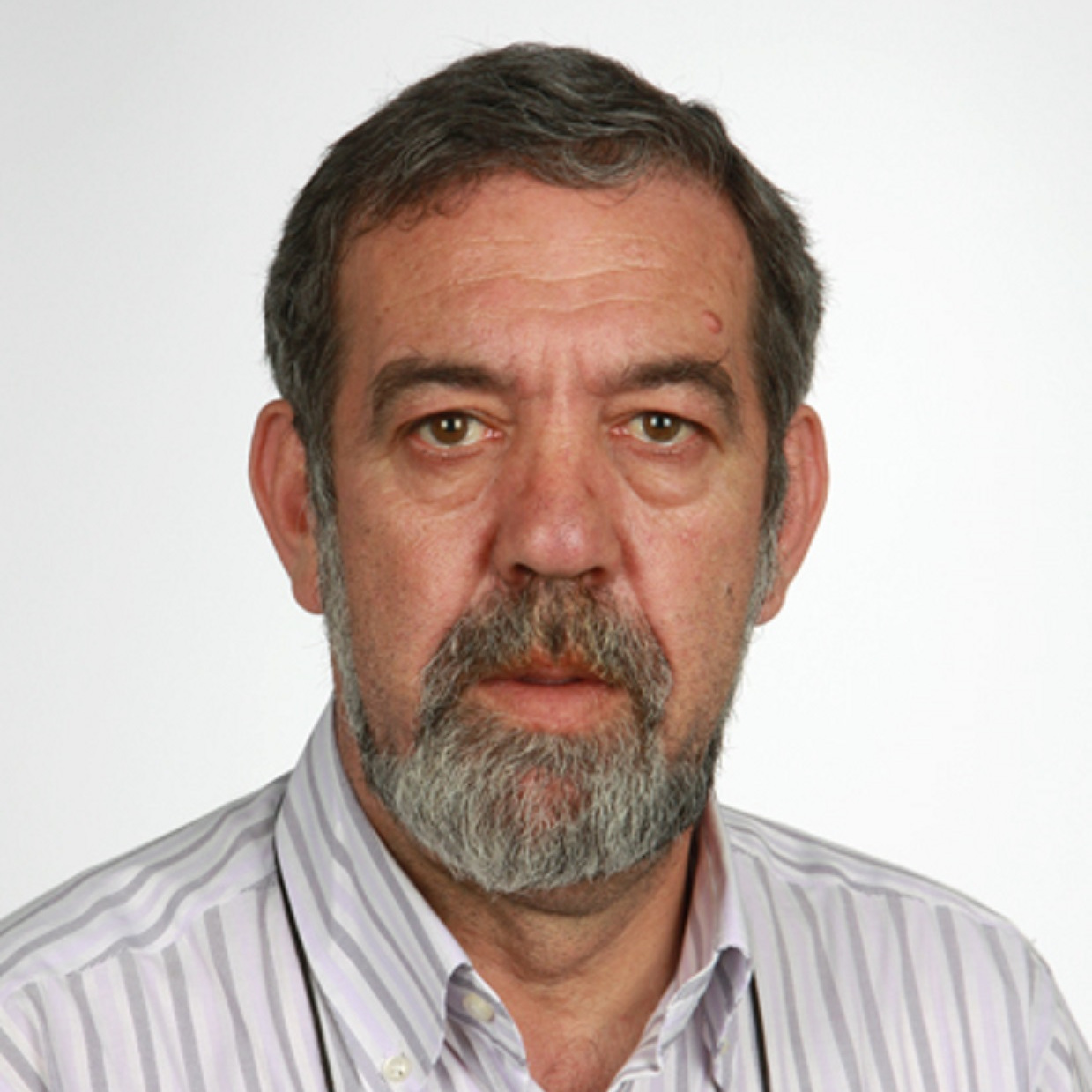
João Gama is an Emeritus Professor at the University of Porto, Portugal. He received his PhD in Computer Science from the University of Porto in 2000. He taught Informatics and data sciences at the School of Economics for more than 30 years. He was the Director of the Master's in Data Analytics for 12 years. He is an EurAI Fellow, an IEEE Fellow, and a Fellow of the Asia-Pacific AI Association. He is a member of the Academia das Ciências de Lisboa. He is a member of the board of directors of LIAAD, a group affiliated with INESC Tec. His main scientific contributions are in the field of learning from data streams, for which he has an extensive record of publications. He is the Editor-in-Chief of the International Journal of Data Science and Analytics, published by Springer.
10:00
10:30
Coffee Break
10:30
12:30
Session 3 Reliability, Safety and Explainable AI
10:30–11:00
MalARN: an Adversarial Reconstruction Network for Improving Detection of Evolving Malware
Francesco Pasqualatto, Luca Caviglione, Massimo Guarascio, Angelica Liguori, Giuseppe Manco, Ettore Ritacco and Antonino Rullo
11:00–11:30
Diagnosing Hallucinations in RAG-Based Educational Recommendation Systems: A Controlled Comparative Study
Ichrak Ennaceur, Haytham Elghazel, Alexandre Aussem, Guillaume Lefebvre and Matthieu Sonnati
11:30–12:00
A Local Reliability Index for Trust-Aware Prediction Explanations under Missing Data
Thanina Amirat, Ilhem Arroudj, Juba Agoun, Louenas Bounia and Lamia Yessad
12:00–12:30
Counterfactuals to Manage Ongoing Business Process Deviances
Vincenzo Pasquadibisceglie, Rossella Anna Giansante, Annalisa Appice and Donato Malerba
12:30
14:00
🍽️ Lunch Break
14:00
15:30
Session 4 Industry Session (1)
14:00–14:30
How to use Language Models for Vehicle Service Complaint Classification under Industrial Constraints?
Adeel Zafar, Slawomir Nowaczyk, Hamid Sarmadi, Saeed Gholami Shahbandi and Nuwan Amila Gunasekara
14:30–15:00
Knowledge Extraction from Aviation Incident Reports via LLM Aspect-Based Summarization and Topic Modeling
Carl Hatoum, Catherine Combes, Virginie Burnaz-Fresse, Christophe Gravier and Mathieu Orzalesi
15:00–15:30
A Practical Evaluation Methodology for Generative AI in Maintenance Applications: Accuracy and Carbon Footprint
Najwa Errachidy, Mounir Bechchi and Dominique Chabot
15:30
16:00
Coffee Break
16:00
17:30
Session 5 Industry Session (2)
16:00–16:30
Towards Personalized Oncology Rehabilitation: A Hybrid LLM–Knowledge Graph Recommendation Approach
Hiba Djebabria, Yacine Sam and Nizar Messai
16:30–17:00
From Zero-Shot to Domain Precision: Synthetic Data Fine-Tuning for Robust NER in Low-Resource Domain-Specific Texts
Adeel Zafar, Slawomir Nowaczyk and Hamid Sarmadi
20:00
22:30
🍷 Social Dinner
09:00
10:00
From Dialogue to Decision: Orchestrating Agents for Conversational Data Exploration and Multi-Objective Optimization
Abstract:
Modern scientific discovery and decision-making necessitate agents capable of navigating both complex datasets and multifaceted, often conflicting, goal landscapes. This talk explores the intersection of conversational data exploration, an incremental process where agents help users articulate needs through data interaction, and multi-objective sequential decision making. While traditional Reinforcement Learning (RL) has advanced task-specific agent training, we are witnessing a paradigm shift toward zero-shot orchestration. By leveraging a spectrum of techniques, from specialized RL policies to general-purpose Large Language Models (LLMs), we can reuse existing single-objective policies to solve complex multi-objective problems without training from scratch. We will discuss empirical evidence from the field of Education showing that this orchestrated approach can achieve competitive Pareto quality while reducing computational cost. The talk concludes by examining open research questions regarding how LLM context richness and reflective foresight enable agents to bridge the gap between incremental data-driven insights and optimal sequential actions.
Biography:
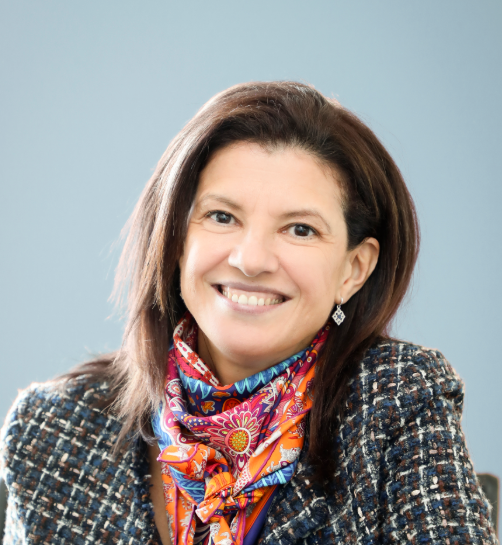
Biography: Sihem Amer-Yahia is a Silver Medal CNRS Research Director and Deputy Director of the Lab of Informatics of Grenoble. She works on exploratory data analysis and algorithmic upskilling. Prior to that she was Principal Scientist at QCRI, Senior Scientist at Yahoo! Research and Member of Technical Staff at at&t Labs. Sihem served as PC chair for SIGMOD 2023 and as the coordinator of the Diversity, Equity and Inclusion initiative for the database community. In 2024, she received the 2024 IEEE TCDE Impact Award, the SIGMOD Contributions Award, and the VLDB Women in Database Award.
10:00
10:30
Coffee Break
10:30
12:30
Session 6 Time Series and Stream Data
10:30–11:00
Similarity-Guided Forecasting of Multiple Sequences from Mechanical Testing Data of Additively Manufactured Components
Antonio Pellicani, Gianvito Pio, Donato Malerba and Michelangelo Ceci
11:00–11:30
Leveraging Foundational Time-Series Models for Zero-shot Appliance-level Load Forecasting
Angelo Impedovo
11:30–12:00
Predictive Process Monitoring through the Lens of Deep Online Learning
Vincenzo Pasquadibisceglie, Simone Capone, Annalisa Appice and Donato Malerba
12:00–12:30
Predicting Quality of Life Deterioration in Cancer Immunotherapy using Multi-Timepoint Data Aggregation
Rihab Ayed, Yanis Bouallouche, Mehdi Hennequin, Mohand-Saïd Hacid and Juba Agoun
12:30
14:00
🍽️ Lunch Break
14:00
16:00
Session 7 AI for Urban and Environmental Systems
14:00–14:30
Improving Indoor Cellular Coverage Mapping using a Mobile Robot
Fatma Ltaief, Adam Gouguet, Guillaume Lozenguez and Luc Fabresse
14:30–15:00
Cognitive Digital Twins for Smart Cities: Adaptive Agent-Based Urban Simulation with Online Learning
Elio Masciari and Enea Vincenzo Napolitano
15:00–15:30
A Hybrid CNN-BiLSTM Approach for Whale Monitoring Using Distributed Acoustic Sensing System
Michel Dione, Jerry Lonlac, Helene Louis, Stéphane Lecoeuche and Anthony Fleury
15:30
16:00
🏁 Closing Ceremony